Myths vs. Facts · Columbus, GA
There's a lot of outdated or oversimplified advice circulating about shoulder pain. Here's what's actually true, according to how Columbus-area specialists approach rotator cuff tendinopathy today.
Patient Experience
This TenJet patient testimonial covers the procedure, what it felt like, and the recovery that followed.
TenJet Patient Testimonial
Video courtesy of HydroCision, Inc., the maker of TenJet®. Individual results vary; this patient's experience is not a guarantee of outcome. Talk with a specialist about whether the procedure is appropriate for you.
Myths vs. Facts
Fact: They're different conditions. Tendinopathy is gradual degeneration, not a discrete tear, and often responds to different treatment.
Fact: Rest can reduce symptoms temporarily, but degenerated tendon tissue typically needs an active intervention to actually heal.
Fact: Many patients respond well to non-surgical or minimally invasive options before surgery is ever considered.
Fact: Tendinopathy pain is often activity-dependent — it can be significant even if it's intermittent.
The Procedure
The claim that surgery is the only fix doesn't hold up once you know about the in-between options. TenJet, made by HydroCision, Inc., treats degenerated rotator cuff tissue through a small incision, guided by ultrasound, without an operating room visit.
Our Network
Get Started
Call the practice most convenient to you below to ask whether TenJet or another treatment approach is right for your case.
See The Procedure
Official demonstration video from HydroCision, the maker of TenJet, plus a look at how tendinitis differs from the deeper tissue degeneration TenJet is designed to treat.
TenJet Shoulder Minimally Invasive Tenotomy


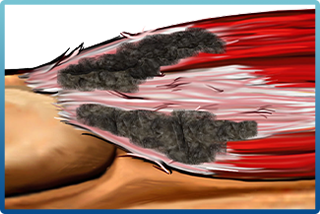
Diagrams and video courtesy of HydroCision, Inc.
Common Questions
Yes. Evaluation and treatment are provided in Columbus, Georgia, without requiring referral to an Atlanta practice.
Accumulated overload rather than a single injury in most cases. Overhead work, repetitive reaching and years of gradual wear are more typical than an identifiable trauma.
Follow-up imaging in published cases has shown resolution without recurrence at six months. Longer-term outcomes vary and depend partly on the underlying tendon health.
Your physician will give specific restrictions, generally centred on avoiding loaded overhead movement early while the tendon begins remodelling.
This information is general and is not medical advice. Whether any procedure is appropriate for you can only be determined by a physician who has examined you and reviewed your imaging.